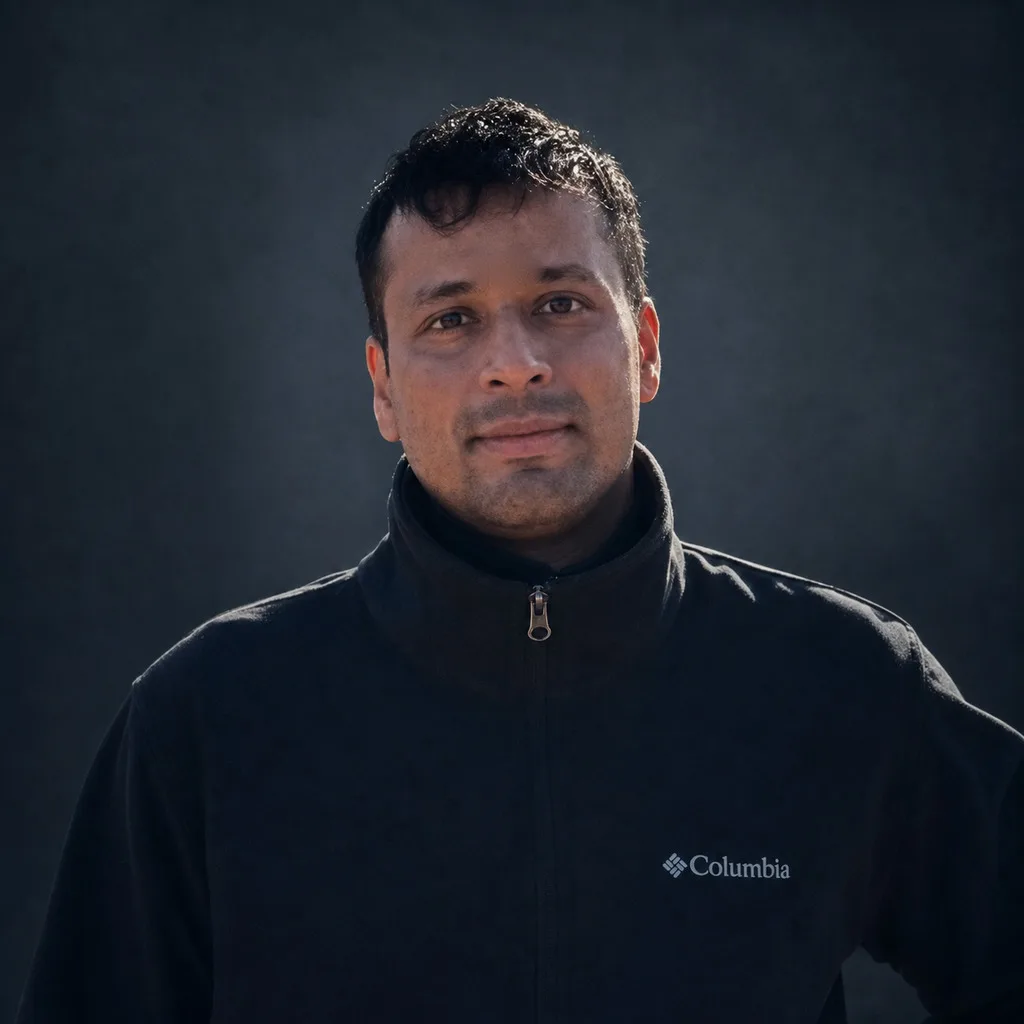
Dileep Kishore

Computational Biologist · Oak Ridge National Laboratory

Dileep Kishore

I’m a computational biologist. Most of my work is in microbial ecology, and lately on data infrastructure and AI tooling for large biological datasets.

What I work on

Currently working on the Microbial Discovery Forge, an AI co-scientist.

Interests

What I’m interested in.

  • Microbial ecology

    How microbial communities are put together, and what holds them there.

  • Scientific data infrastructure

    Lakehouses and pipelines for genomic and trait data.

  • AI for science

    Agents and tooling for working with large biological datasets.

  • Machine learning on genomes

    Predicting traits from sequence.

Work

Some things I work on.

Microbial Discovery Forge

An AI co-scientist and research observatory at KBase. It connects an agent to the BER data lakehouse through a set of reusable skills. Part of the BERIL project.

What I did

I built it and am its main contributor.

  • query
  • discover
  • ingest
  • papers
  • report

agent

lakehouse

Schematic. The agent reaches the data through reusable skills.
SiteGitHubNote

G2PAI

A genotype-to-phenotype data lakehouse at Oak Ridge, holding data from GPTgp, PMI and other projects behind one queryable model.

What I did

I work on G2PAI.

  • genomes
  • traits
  • measurements

one store

Schematic. Separate sources loaded into one queryable store.
Note

Not a public repository.

TraitWeaver

A Nextflow pipeline for annotating bacterial genomes and predicting traits from them: quality control, then gene annotation, then several annotation tools run in parallel.

What I did

I built it.

  1. Genomesinput
  2. Quality checkfilter
  3. Gene annotationbackbone
  4. Trait prediction6 tools, in parallel
  5. One joined tableoutput
TraitWeaver stages. Every stage writes the same table shape.
Note

Not a public repository.

Microbial trait prediction

Predicting what a bacterium can do from its genome sequence.

What I did

I lead this work.

Schematic. One classifier per carbon source, trained on gene presence plus measured growth.
GitHubNote

CommScores

Interaction scores computed from pairs of genome-scale metabolic models, and a classifier that turns them into a predicted ecological outcome.

What I did

I work on CommScores with Andrew Freiburger and Chris Henry.

  • MRO
  • MIP
  • GYD
Schematic. Three scores, all computed from the same pair of models in one medium.
DocsNote

Not a public repository.